3.1
War is exhausting Russia
Both ordinary citizens and senior officials in Russia are feeling the negative impact of the war.
Russia is facing increasingly severe economic challenges and is neglecting almost all non-military sectors as the war in Ukraine drags on. The risk of economic and social instability is set to rise in 2026.
Last year, the average Russian became even more acutely aware of the profound impact the war has on daily life.
At the most basic level, this was clearly illustrated by the fuel crisis triggered by Ukrainian drone strikes. At the political level, officials began speaking openly about the need to cut other areas of public spending to cover the costs of the war, while the 2026 budget introduced numerous tax increases explicitly justified by military expenditures.
The extent of the strain is also evident in the 2025 budget deficit, which is significantly larger than initially planned. This contrasts sharply with Putin’s early wartime assurances that the war against Ukraine would not be financed at the expense of other sectors. As anticipated, reality has turned out to be quite different.
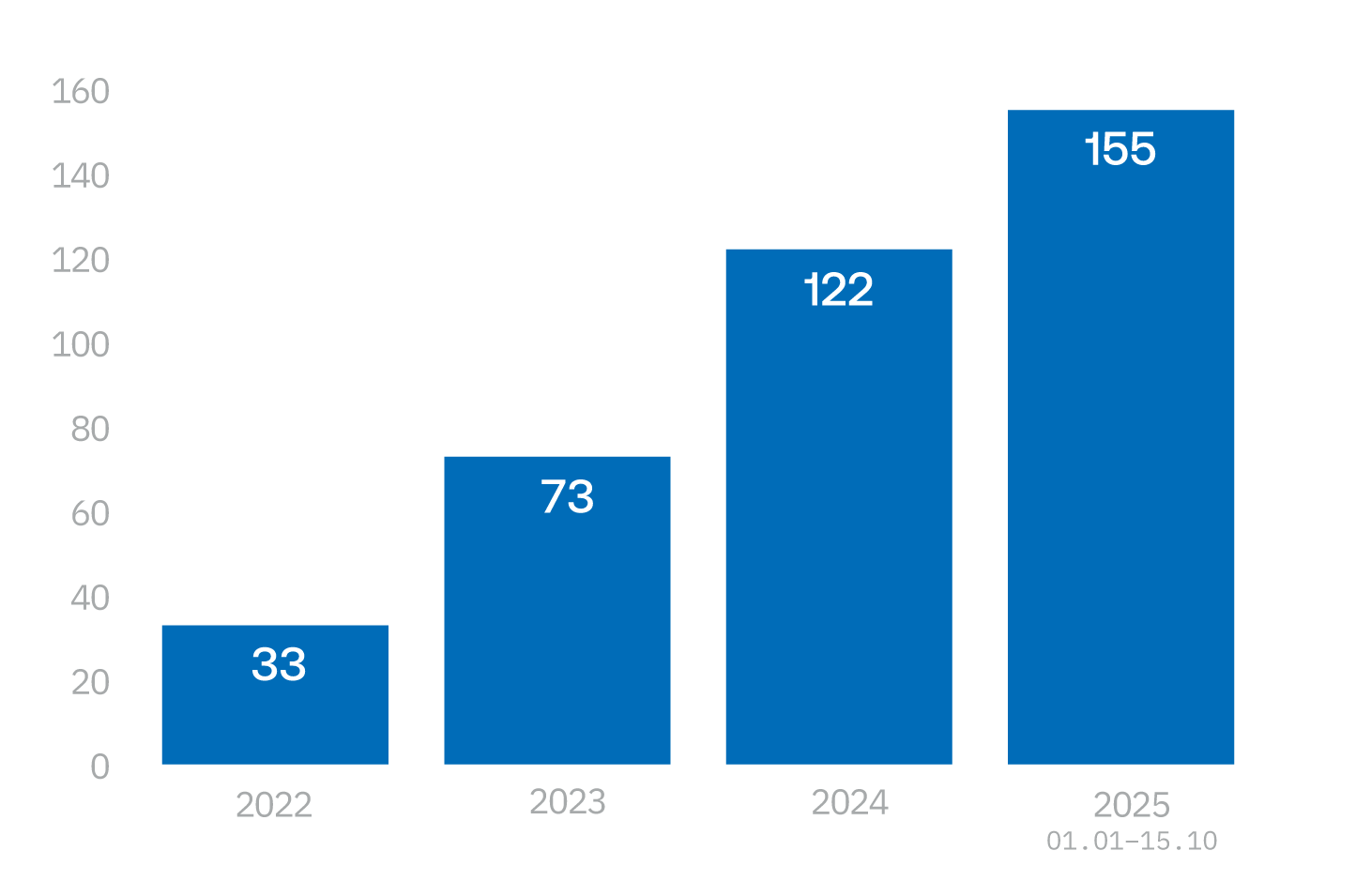
The negative impacts of the war are also clearly felt by Russia’s senior officials. The competition for shrinking resources, coupled with the need to find scapegoats for visible failures, has led to an unusually high number of corruption cases involving high-profile officials in 2025. Furthermore, divisions within the ruling elite over economic policy have also sharpened, resulting in disagreements spilling into the public domain over the state of the economy and the central bank’s monetary policy.
A striking example came at the Eastern Economic Forum, where Sberbank CEO German Gref stated that Russia had entered a state of “technical stagnation”. This assertion was soon refuted by President Vladimir Putin, who denied the existence of any such stagnation.
The scale and significance of the war’s domestic consequences were further underscored in 2025 when the central government decided to sharply curtail public access to statistical data. More detailed statistics on birth and death rates disappeared from public view, as did data on deaths resulting from crime and a range of economic indicators.
At the same time, halting the war in Ukraine would pose significant political risks for the Russian regime. An end to the fighting would deprive the authorities of a universal justification for their domestic problems. While the war continues, it is far easier to enforce strict repression and justify both the restriction of democratic freedoms and the country’s socio-economic decline.
However, prolonging the war entails increasingly severe economic costs and the ongoing neglect of non-military sectors, creating fertile ground for domestic discontent. The regime has now reached a point where both ending the war and continuing it pose substantial internal political risks.
Arrests of senior officials are on the rise
Source: Новая газета Европа