1.2
Russia targets the ‘global majority’ and the Commonwealth of Independent States
Russia’s claim to great-power status rests on weakening the West and international institutions that uphold democracy and human rights.
While courting formerly colonised states, Russia is wary of being associated with its own imperial past and present.
The Kremlin is debating ways to influence the more assertive Commonwealth of Independent States members, combining direct pressure with propaganda.
In the Russian leadership’s view, two key processes are shaping the international arena: the perceived decline of the so-called collective West and the shift away from globalisation towards greater fragmentation. Existing ties between states are expected to continue, but in Russia’s conception, they are increasingly driven by realpolitik and national interests rather than by shared ideology.
The Kremlin, which aspires to global great-power status, hopes to accelerate these trends. The reason is simple: with an ageing population and a shrinking economy, Russia can present itself as a great power in the future only if the West and the international organisations that uphold democracy and human rights in practice are weakened.
Moscow has therefore set out to court the so-called “global majority” to undermine Western influence. On the one hand, Russia seeks to develop alternative financial payment and settlement systems that bypass Western infrastructure. On the other, it promotes narratives that cast the West in a negative light.
KEY RUSSIAN TALKING POINTS
• By protecting intellectual property, the West restricts access to resources for countries seeking to modernise their economies.
• The West uses climate policy as a tool of unfair competition, hindering the development of the “global majority”.
• Through measures aimed at constraining Russia’s defence industry, such as secondary sanctions, the West seeks to preserve its hegemony and slow the economic development of non-Western societies.
Russia understands that most major powers, including several of the more influential BRICS members, have little interest in a rapid and radical overhaul of the world order, which would bring instability and uncertainty. For this reason, Moscow often opts for “softer” claims: that the “global majority” can manage without the West, and that the West needs the rest of the world more than the rest of the world needs the West.
This approach is more likely to succeed, as it avoids forcing third countries into overt opposition to the West. At the same time, Russia increasingly frames its actions as a struggle against Western hegemony, seeking support from states that suffered under colonial rule.
In doing so, Russia does not regard the “global majority” as valued partners, but merely as instruments for reducing Western influence.
THE PRISON GUARD OF THE COMMONWEALTH OF INDEPENDENT STATES
While posturing as an anti-colonial force, Russia fears being associated with its own colonial and imperial past and present, particularly in the member states of the Commonwealth of Independent States (CIS).
The Russian leadership is particularly troubled by the growing self-confidence of Central Asian leaders and “nationalist” intelligentsia. Their increasingly critical view of Russia as a conqueror, colonial master and impediment to development is seen by the Putin regime as damaging Russia’s image in the eyes of the “global majority”.
As a result, the Kremlin is discussing ways to influence CIS leaders and populations through direct pressure and extensive propaganda campaigns that glorify Russia. Among other things, campaign organisers are tasked with promoting the claim that Russia bestowed civilisation upon the peoples of Central Asia and gave them far more than it ever received in return.
Because Moscow can no longer issue unquestioned orders to former Soviet republics, it has adopted a different approach towards more self-assertive CIS states. Through officials engaging with Central Asia, figures in education, and Russian educational institutions and their branches, the Kremlin seeks to shape younger generations – the future elite of CIS states – in a direction loyal to Moscow. In this way, Russia continues to act like a prison guard within the enclosure it has created in the post-Soviet space, seeking to compensate for the “escape” of Moldova Moldova remains formally a CIS member but has suspended its participation in most areas.[1], Georgia and Ukraine by exerting harsher pressure on those who remain.
Russia’s efforts to manipulate the “global majority” will not cease in the near future. Whether they prove effective will depend primarily on the willingness of states labelled as part of the “global majority” to go along with Russia’s manoeuvres.
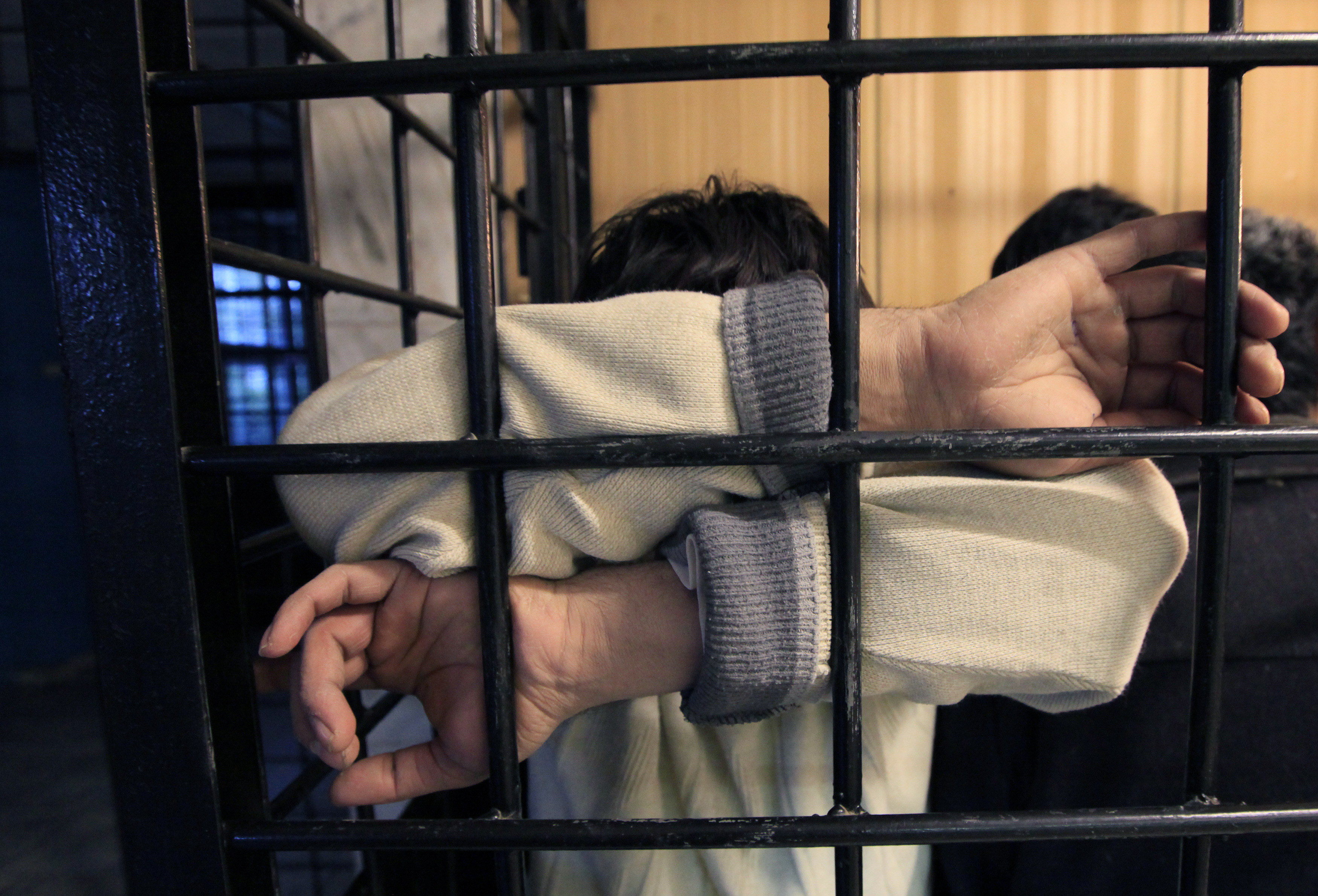
Russia’s true attitude towards the “global majority” is reflected in the brutal treatment of its representatives. Source: Ilya Naymushin (Reuters)