5.1
Russia is adapting its armed forces for unmanned warfare
Russia is establishing a large number of unmanned systems units across all services and branches of its armed forces, with priority given to unmanned aerial vehicle units.
In any future conflict with Russia, allies must be prepared to face an adversary that employs unmanned systems at scale – at strategic, operational and tactical levels on land, in the air and at sea.
For NATO, achieving a breakthrough in countering unmanned aerial vehicles is critical to making Russia’s simple, mass-produced drones ineffective.
Oleksandr Syrskyi, commander-in-chief of the Ukrainian Armed Forces, says unmanned aerial vehicles account for up to 70% of losses of weapons and military equipment in the war.
As part of its military reform, Russia is establishing unmanned systems units across all services and branches and assigning them both combat and combat-support roles, in line with the “mass army” principle. The creation of a dedicated unmanned systems branch is almost certainly rooted in lessons learned from the war in Ukraine, which have demonstrated the growing military importance of unmanned platforms and their potential to shape the operational environment.
The development of Russia’s unmanned capabilities is of major importance for NATO and Estonia for several reasons:
- Russia’s defence industry and civilian sector are likely capable of supplying enough unmanned systems to equip the new units.
- The extensive adoption of unmanned systems will likely enhance Russia’s existing capabilities, such as intelligence, naval-strike, indirect-fire and precision-strike capabilities.
- In the event of conflict, the state must be prepared to fight an adversary using a large number of unmanned systems at strategic, operational and tactical levels on land, in the air and at sea, simultaneously across Estonia’s entire territory.
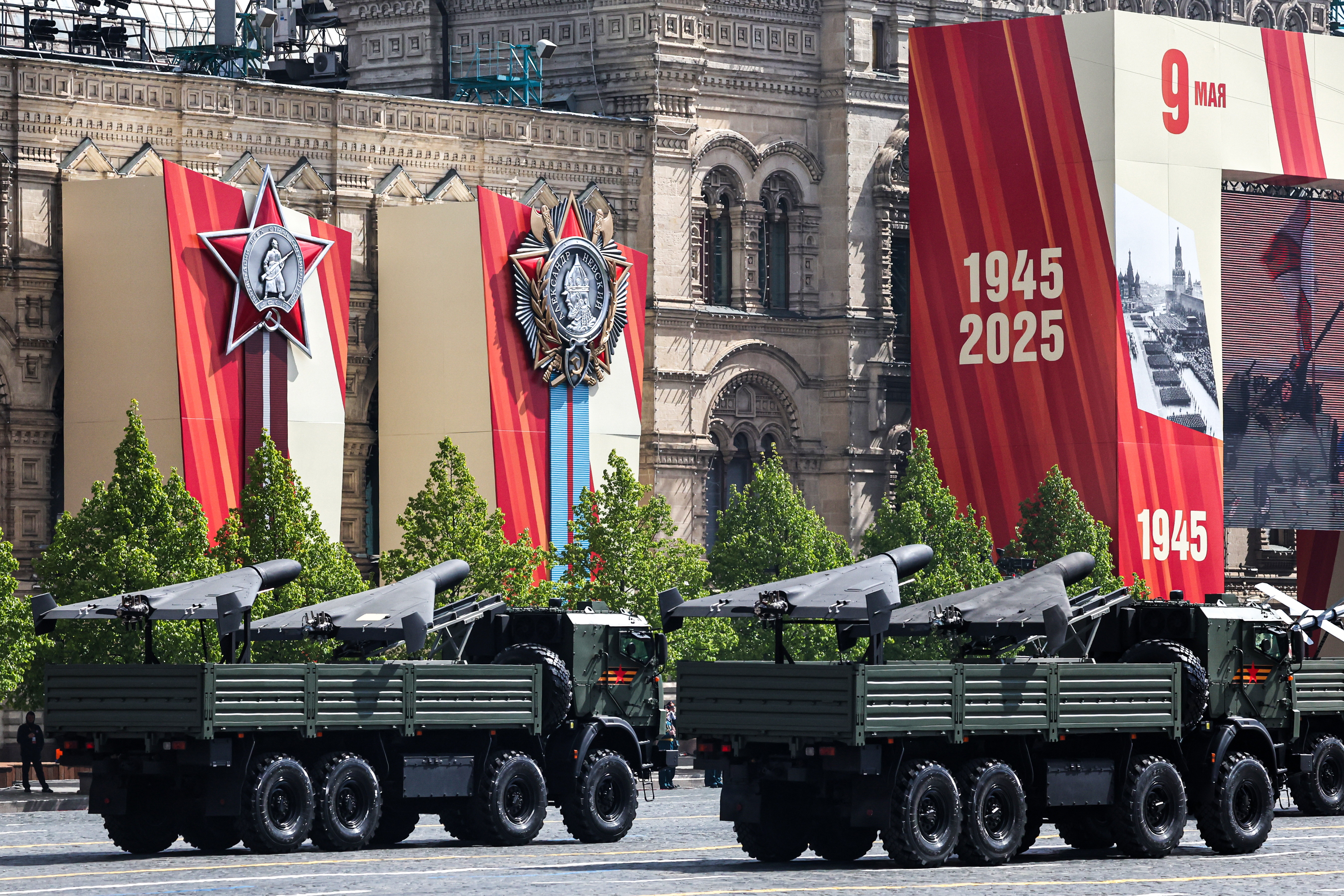
Geran-2 unmanned aerial vehicles at the 9 May parade in Moscow. Source: Alexander Kazakov (ZUMA Press)
A PROJECT OF NATIONAL IMPORTANCE
To promote cooperation between the public and private sectors, the Russian government has launched a National Project for the Development of Unmanned Aerial Vehicles, aimed at developing new UAV technologies. The plan envisages training one million specialists and providing UAV-related coursework in 75% of Russian schools by 2030.
THE UNMANNED SYSTEMS BRANCH AND ITS UNITS
Russia’s unmanned systems branch was established by Vladimir Putin’s order in the autumn of 2025. The purpose of establishing a new branch is almost certainly to centralise command, control and oversight of unmanned systems, consolidate the many ad hoc units created during the war in Ukraine, and introduce standardised tactics, techniques and procedures across the armed forces.
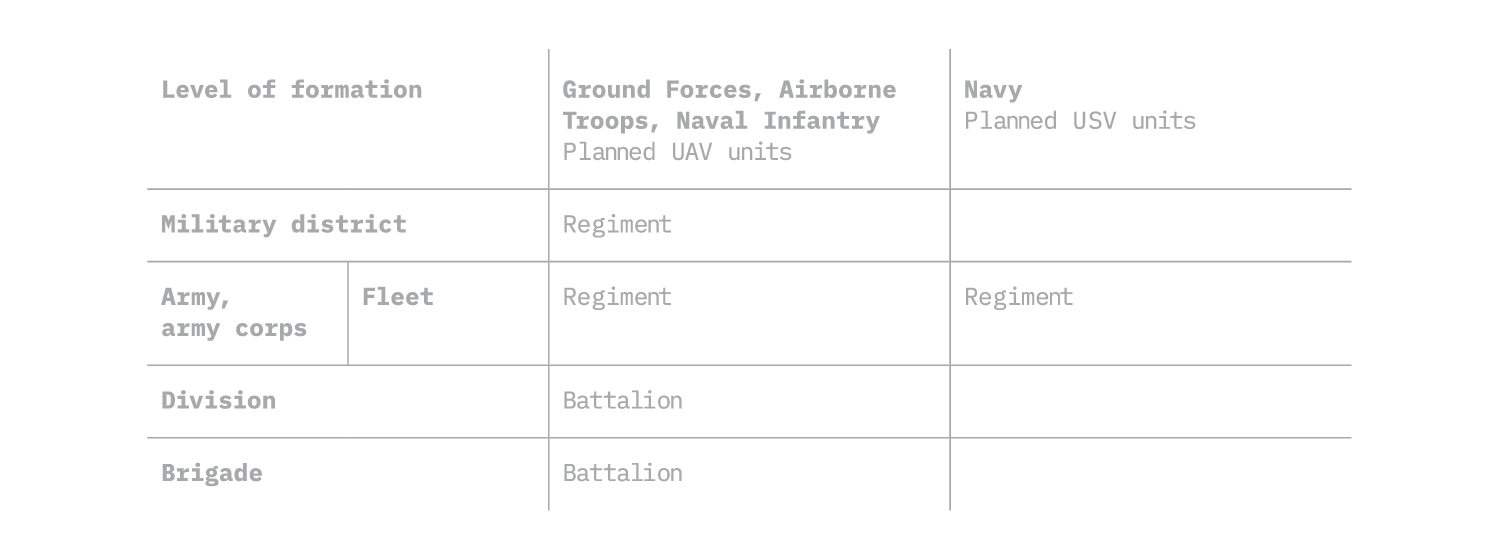
The reform is expected to produce around 190 unmanned systems battalions, most of which will consist of UAV units operating within the Ground Forces, the Airborne Forces and the Naval Infantry.
Plans for unmanned ground vehicle (UGV) units are less developed, as UGV technology remains at an early stage in Russia and elsewhere compared with unmanned air and maritime systems. UGVs are primarily used for combat support and logistics tasks. They are most common in Russia’s engineering units, which employ them for detecting explosives, mine-laying and demining and reconnaissance in difficult or dangerous terrain.
The Russian Navy is creating attack-oriented unmanned surface vessel (USV) units across all its fleets and the Caspian Flotilla. Within the Aerospace Forces, the GROM “Kaskad” UAV brigade is the only unit of its kind in Russia in terms of role and status.
An overview of the planned units and their size by service and branch is shown in the table.
The pace at which Russia establishes these unmanned systems units will depend on the duration and outcome of the war in Ukraine. However, unmanned systems are almost certainly a priority in Russia’s armaments programme. In the Baltic Fleet, a regiment of unmanned naval strike vehicles has been formed, along with a UAV regiment under the direct command of the Leningrad Military District. These units are currently being staffed, armed and equipped. In the coming years, the Baltic Fleet is also likely to form a UAV regiment, and UAV battalions are expected to be established in the divisions of the 6th Combined Arms Army. These units will augment Russia’s existing intelligence, naval-strike, indirect-fire and precision-strike capabilities in Estonia’s immediate vicinity.